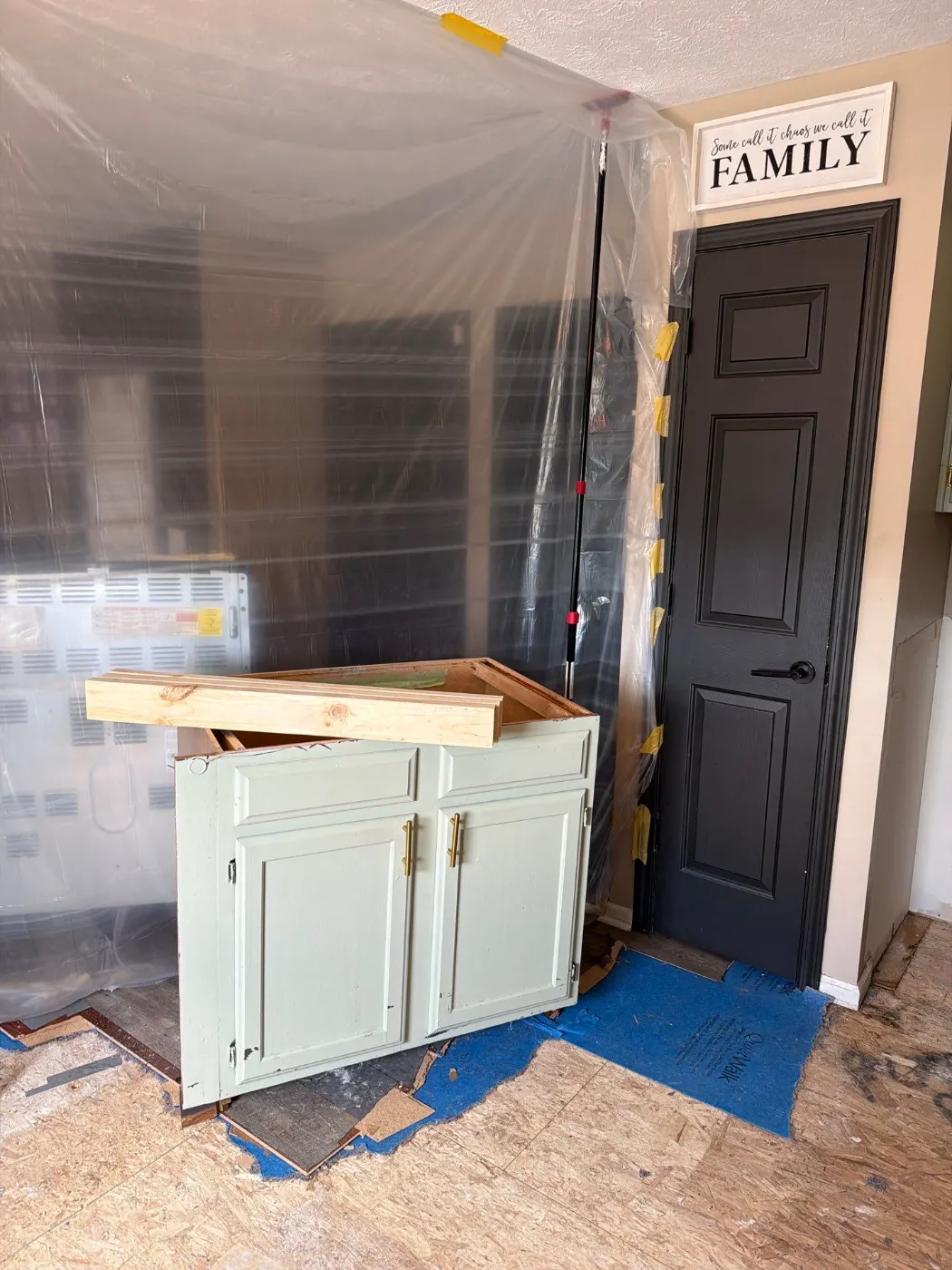
Basement Flooding in Clayton, IN
When basement water in Clayton spreads overnight, Clayton Water Restoration answers the phone at any hour.
Clayton Water Restoration delivers Basement Flooding across Clayton and surrounding areas with certified crews available 24/7 and every step documented for insurance. Call (317) 653-6821.
- Service: Basement Flooding for Clayton homeowners
- Service area: Clayton, IN and surrounding areas
- Response time: Fast local response for Clayton; live dispatch every hour of the year
- Licensed and insured (License #RC21100059)
- Serving Clayton, IN since 2018
Basement Flooding Cleanup in Clayton
We'll pump out and dry a flooded basement anywhere in Clayton, day or night.
Basements Here
Plenty of Clayton homes went up between the 1800s and the 1900s, and full basements are common. Crawl spaces are common in parts of Clayton too.
Where the Water Comes From
Homes near White Lick Creek face added flood risk after heavy rain.
Our crews work all over Clayton, from Country Village to the streets near Clayton Community Park and Cascade High School. We also clean up flooded basements in Amo, Belleville, Plainfield and Danville.
Expert Basement Flooding for Clayton Homeowners
Water has been in your Clayton basement before, which changes what the drying plan has to account for. Material that's been wet once holds more moisture at the same conditions, old staining hides new staining, and a previous repair can trap water behind it. Clayton Water Restoration dispatches a crew within two hours, reads the whole perimeter, and documents the current loss separately from anything that happened in earlier years.
Most of what people store in a basement sits on the floor, so Clayton Water Restoration deals with contents early. The crew lifts furniture onto blocks, moves boxes to dry space and photographs anything damaged before it leaves your Clayton home. That list goes into your photo report, which helps if you decide to file a claim for your belongings.
Removal on Clayton Water Restoration jobs stops where the readings stop. Drywall that wicked water gets cut at a measured height above the line, wet batt insulation comes out of the bays and gets bagged, carpet pad goes, and the baseboard comes off so the cavity's open to air. Material the meters show dry stays in place, which is what keeps the rebuild side of the scope small.
Check your policy for water backup and sump overflow coverage, and look at the limit listed next to it. Finished basements can cost more to put back than people expect, so it helps to know what your policy says early. Clayton Water Restoration documents the loss in your Clayton basement completely and walks you through it, and the coverage decision stays with your insurance company.
Shut off the water supply to the water heater or washer, then call Clayton Water Restoration at (317) 653-6821. If the breaker is reachable without stepping in water, switch off power to the appliance first. The crew documents the failure point and the wet area in your Clayton basement from the first walkthrough.
Signs You Need Basement Flooding Cleanup
If you notice any of these in your Clayton home, schedule a free inspection before the issue worsens.
The breaker feeding your Clayton sump pump has tripped and the pit is filling
Water dripping through the basement ceiling below the first floor laundry room or bathroom
Mortar joints in the foundation wall that feel damp or crumble when you press a thumb into them
Hardwood on the floor above the basement cupping or crowning along the board edges
Storage tubs in your Clayton basement sitting in standing water, with papers and photos stuck together
Water welling up around a floor crack or the base of a steel support column
Your water heater is leaking at the base, with water spreading across the Clayton basement floor
Carpet that squishes underfoot along the perimeter while the middle of the room still feels dry
A tide line across the legs of stored furniture, sitting higher on one side of the room
A musty, earthy smell that hits you as soon as you open the door at the top of the stairs
How Clayton Water Restoration Handles Basement Flooding
We follow these steps in order on every Clayton job.
Safety and Source Check
Power to the affected area gets evaluated at the panel before anyone walks into standing water, and the crew locates the entry point. A failed pump, a stuck float switch, a bad check valve and a backed up drain each leave different evidence behind them.
Moisture Mapping
Thermal imaging finds the temperature differences that mark wet material and penetrating meters confirm it with numbers. Readings get taken on drywall, framing, the bottom plate, the subfloor and the slab, and the wet area gets marked and measured room by room.
Contents Handling
What was stored on the floor gets photographed, inventoried, and either blocked up off the slab or carried out of the space. Soft goods and cardboard that held contaminated water leave the house, and the list of it goes in your file.
Upstairs Moisture Check
The crew closes off the stairway and reads the first floor walls above the basement of your Clayton home, along with the underside of the floor. Those readings show whether humidity moved up and keep the drying confined to the basement.
Rebuild and Finish
Insulation, drywall, trim, paint and flooring go back in after the clearance readings. The finished work gets walked with you against the scope you approved in writing, and the drying readings stay in your file.
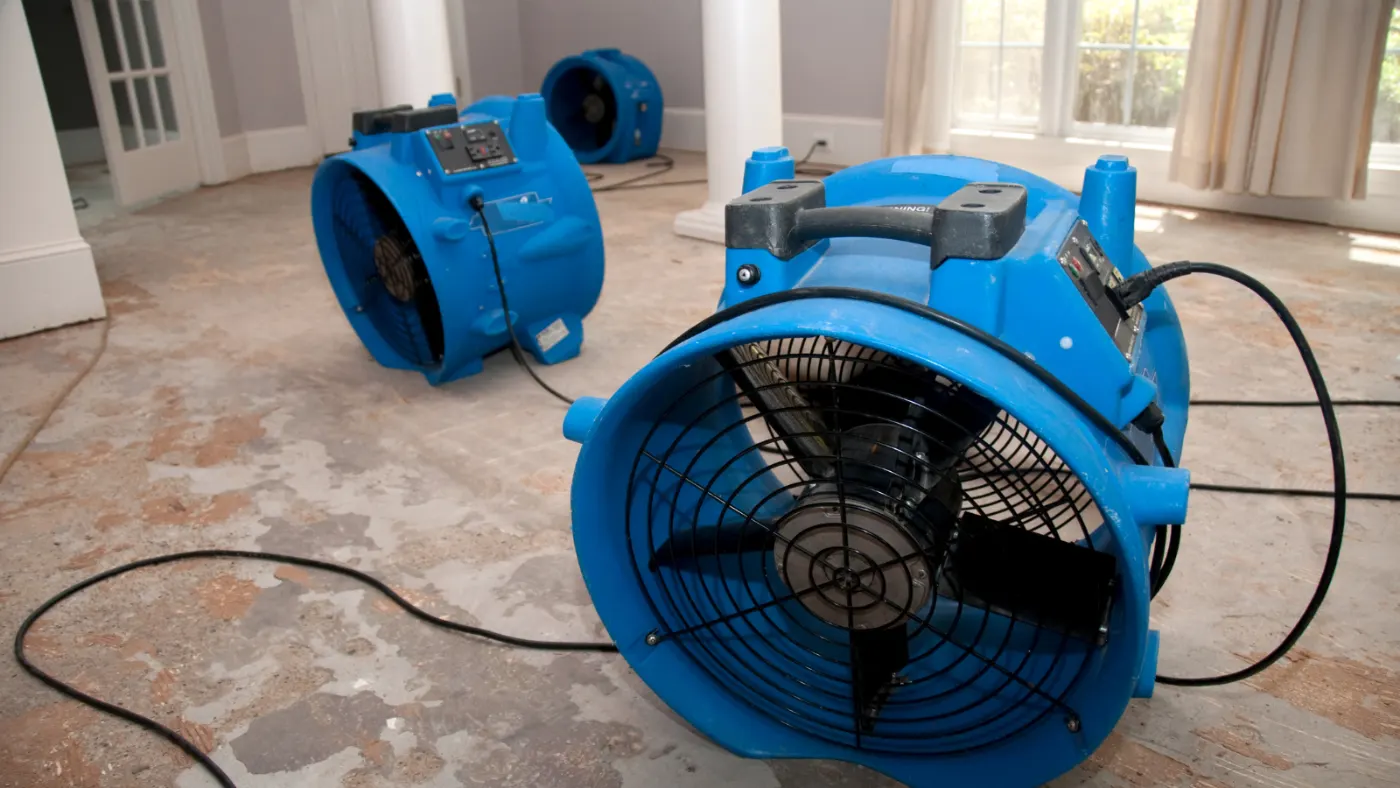
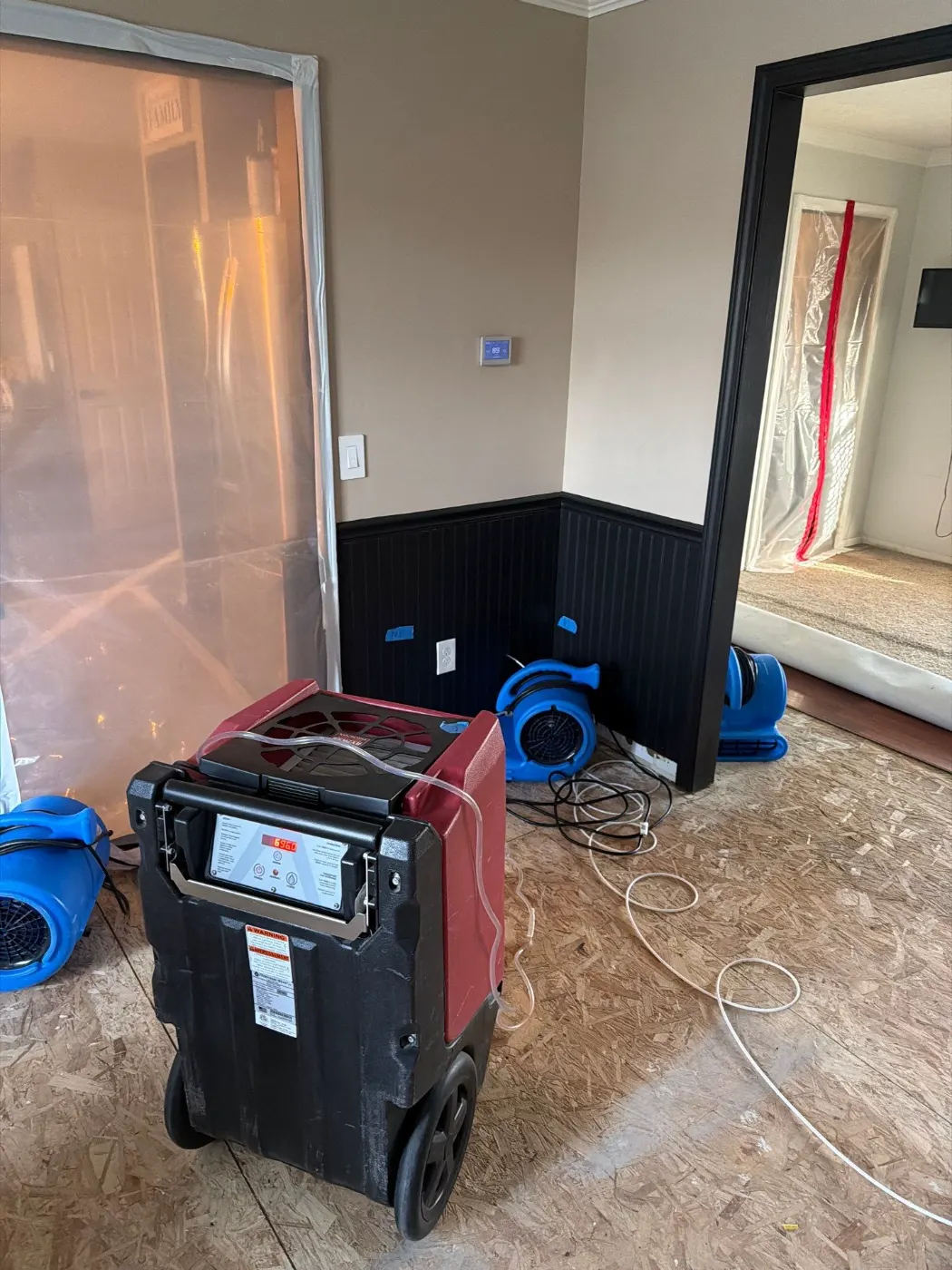
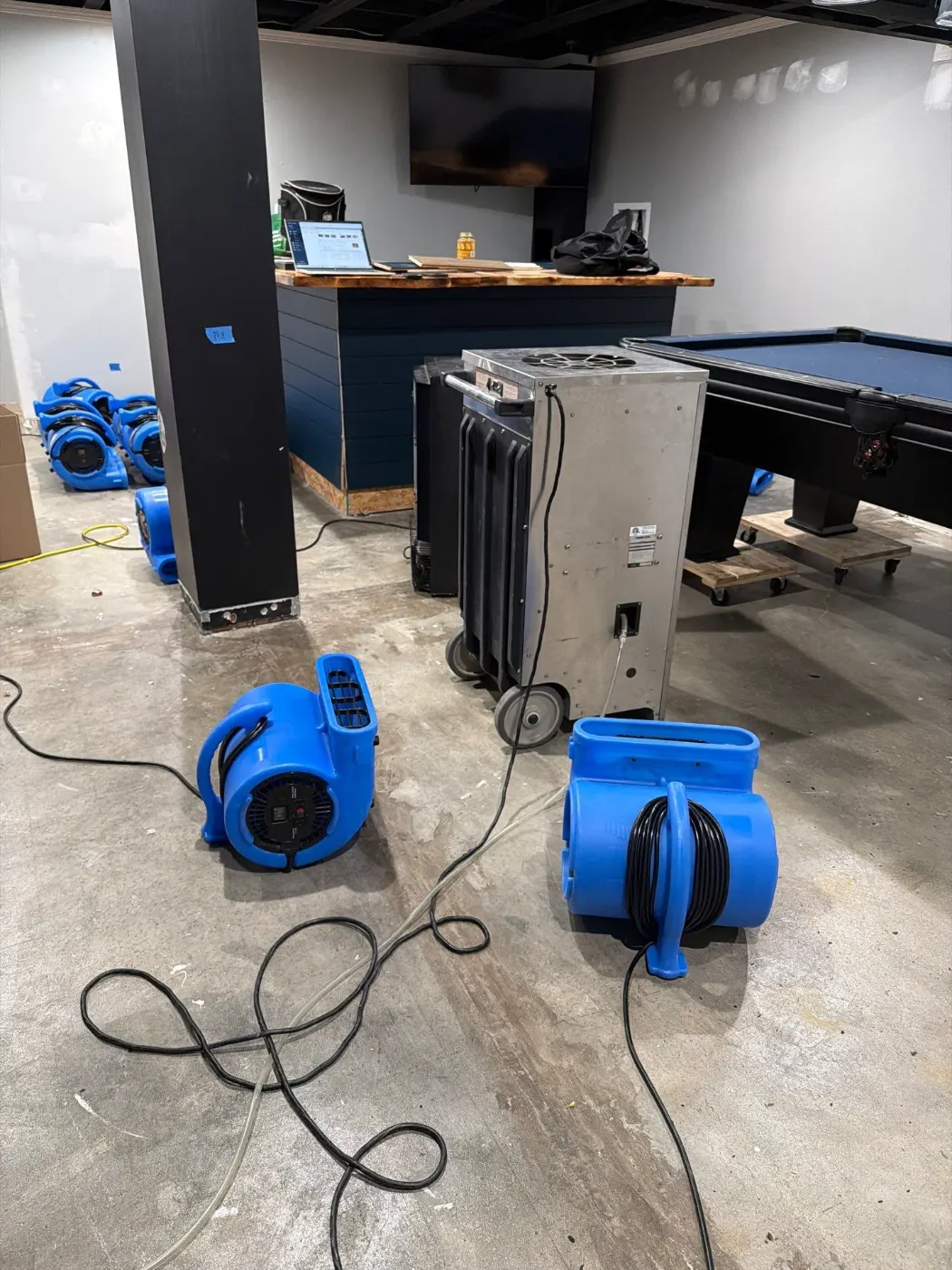
Basement Flooding in Clayton
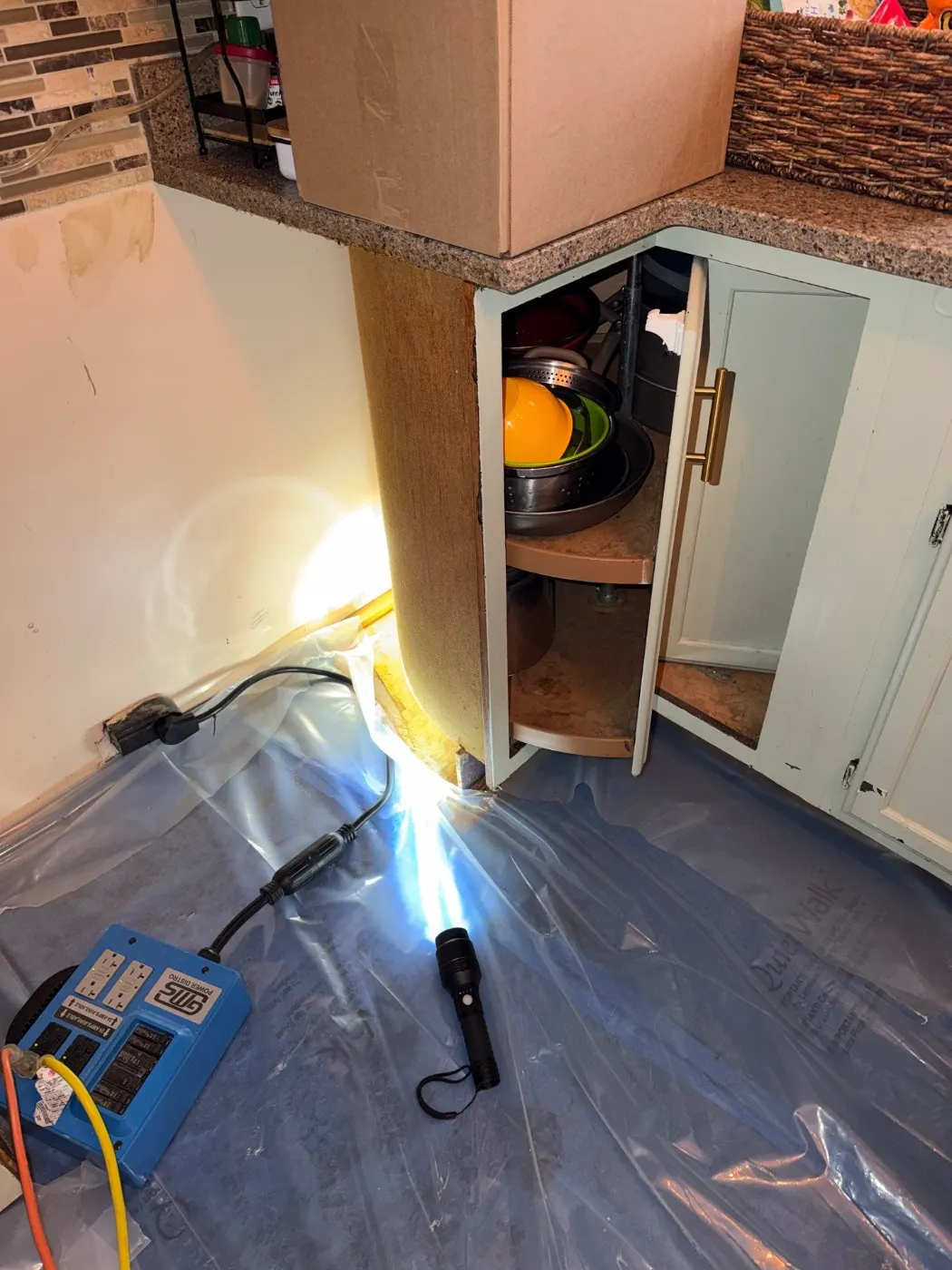
Photographs from real basement flooding jobs completed by our crew in Clayton and surrounding areas.
Basement Flooding FAQ
Questions Clayton homeowners ask us about basement flooding cleanup.
Guidance and Standards for Basement Flooding
- EPA advises drying water damaged areas and items within 24 to 48 hours to prevent mold growth. EPA: A Brief Guide to Mold, Moisture and Your Home
- Ready.gov notes that homeowners insurance policies don’t cover flooding, so check what your own policy says. Ready.gov: Floods
Clayton Neighborhoods We Serve
We take basement flooding calls in every part of Clayton. Pick your neighborhood for local details.
Other Restoration Services in Clayton
Clayton Water Restoration handles the full scope of restoration work. Explore our other services below.
Water Damage Restoration in Clayton
24/7 emergency response. IICRC certified water restoration from extraction to full dry out.
Learn more →Sewage Cleanup in Clayton
Category 3 biohazard cleanup. Full containment, decontamination, structural restoration.
Learn more →Storm Damage in Clayton
Storm related water emergencies. Tarping, extraction, drying, and full restoration.
Learn more →Request Basement Flooding Cleanup
Reach Us Directly
Our team is available 24/7 for emergencies and ready to schedule inspections during business hours.
Need Immediate Help?
For active water or mold emergencies, call us directly. We are available 24/7.