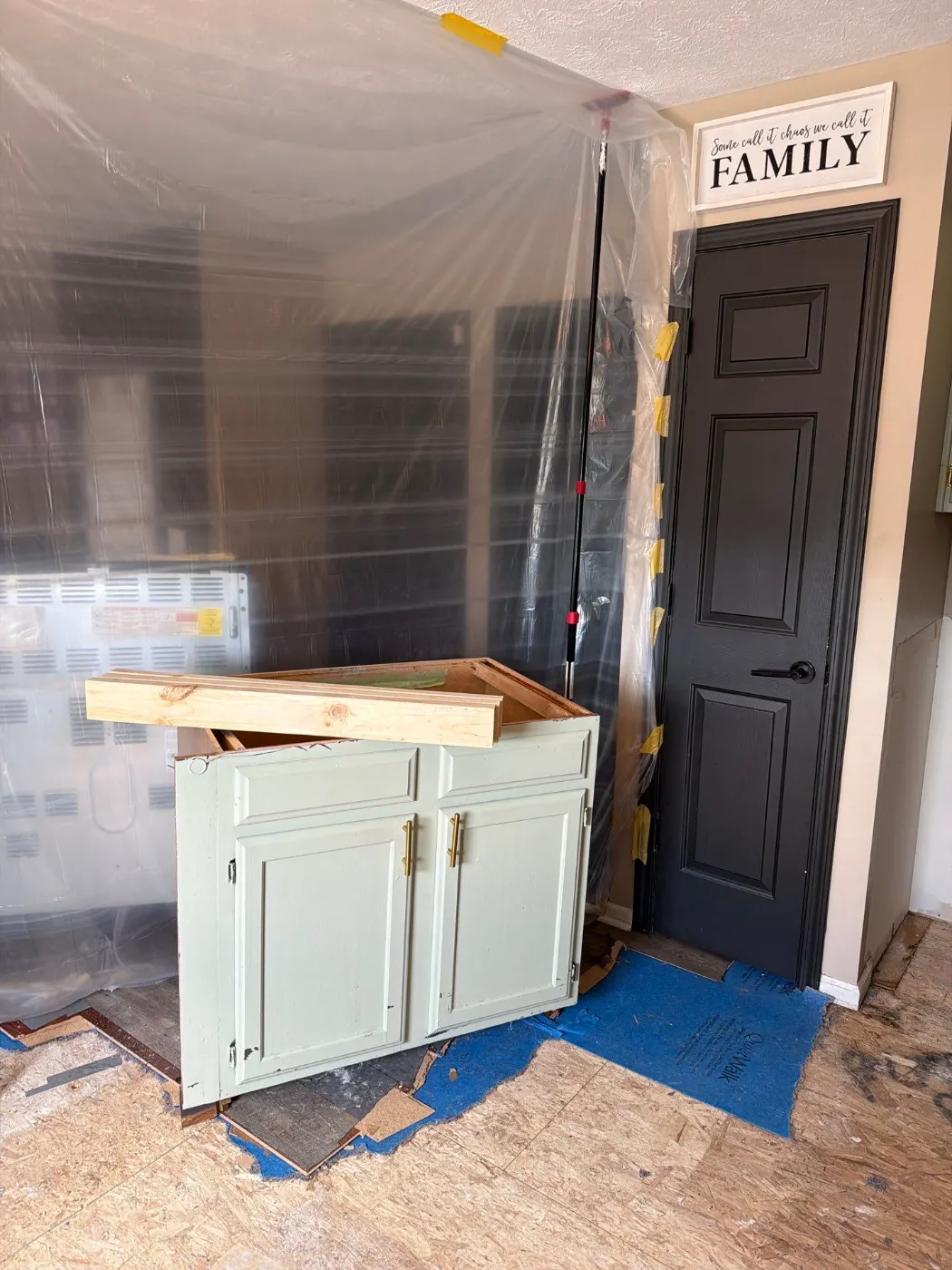
Commercial Mold Remediation in Clayton, IN
After the leak is fixed, Clayton Water Restoration deals with what it left behind in your Clayton walls and ceiling cavities.
Commercial Mold Remediation in Clayton deserves a careful start: Clayton Water Restoration schedules the assessment, maps the problem, and puts the plan in writing before anything else. Call (317) 653-6821 to schedule.
- Service: Commercial Mold Remediation for Clayton homeowners
- Service area: Clayton, IN and surrounding areas
- Response time: Scheduled inspection, typically next business day or sooner
- Licensed and insured (License #RC21100059)
- Serving Clayton, IN since 2018
Commercial Mold Removal in Clayton
We handle commercial mold removal throughout Clayton, and we'll find the moisture source before the scope is written.
Moisture Sources Here
Buildings near White Lick Creek can take on floodwater, and anything left wet afterward can grow mold. We'll go over the air handling and any past leaks on the first walkthrough with whoever runs the building.
We take commercial mold jobs anywhere in Clayton, including the streets around Cascade High School and Clayton Presbyterian Church. We also handle commercial mold work in Stilesville, Amo, Belleville and Plainfield.
Commercial Mold Remediation for Clayton Businesses
Cleaning it yourself and watching it return is the pattern most facilities managers describe. Someone wiped the wall with bleach, the stain faded, and four months later it was back and wider. Surface treatment does nothing for growth inside the cavity and nothing at all for the water feeding it. Clayton Water Restoration handles commercial mold remediation in Clayton to the IICRC S520, and the affected materials come out while the moisture source gets corrected as part of the job.
Clayton Water Restoration starts commercial mold work in Clayton by finding the water. Crews walk the affected area with thermal imaging and moisture meters, lift ceiling tiles where the readings point and open small inspection ports in wall assemblies. The scope gets written from that survey, because a scope built from a visible stain usually understates the area.
The scope decision on each assembly comes down to whether the material can be cleaned or has to come out. Porous materials with growth in them, saturated batt insulation, affected gypsum board and ceiling tile get removed and bagged inside containment. Nonporous framing, metal studs, concrete and structural steel get HEPA vacuumed and wiped down. Clayton Water Restoration writes which category each assembly falls into so the building owner knows what's being removed and why.
Clayton Water Restoration documents the loss and bills the work you approved, and coverage questions stay with you, your broker and your carrier. What the team controls is the quality of the record, which means moisture readings tied to locations and dates, photographs that show the condition and a scope that explains itself line by line for your Clayton property.
A damp smell that lingers weeks after a dry out is a reason to call Clayton Water Restoration. The crew checks the cavities nobody opened the first time and tells you from the readings what's still wet. Inspections in Clayton get scheduled around your building's access rules.
Signs You Need Commercial Mold Remediation
If you notice any of these in your Clayton building, schedule a free inspection before the issue worsens.
Staining that reappears in the same ceiling location after the roof was already repaired
Condensate dripping from an air handler or a chilled water line onto the mechanical closet floor
A written tenant complaint that names a stain or an odor in a specific room
Snowmelt that pools at an entry threshold and keeps the wall base damp every winter
Ceiling tiles with staining on the back side that only shows when you lift one out of the grid
A damp smell in a main lobby or stairwell that nobody noticed six months ago
Interior paint blistering or peeling on a wall that backs onto a restroom or janitor closet
Rust spots on suspended ceiling grid or hanger wires directly under a stained tile
Loading dock leveler pits that collect water beside an office or break room wall
Water cleanup by maintenance staff that used fans alone, with the walls never opened
How Clayton Water Restoration Handles Commercial Mold Remediation
We follow these steps in order on every Clayton job.
Initial Call and Access Planning
You describe what you're seeing and Clayton Water Restoration asks about the building: occupancy, access rules, who holds the keys and whether anyone has opened the area. That conversation sets up the inspection around your schedule.
Removal Sign-Off Inspection
After removal and before cleaning, the crew lead walks every opened cavity and checks the cut lines against the survey. Photographs and readings document the condition of each cavity at sign off.
Structural Drying
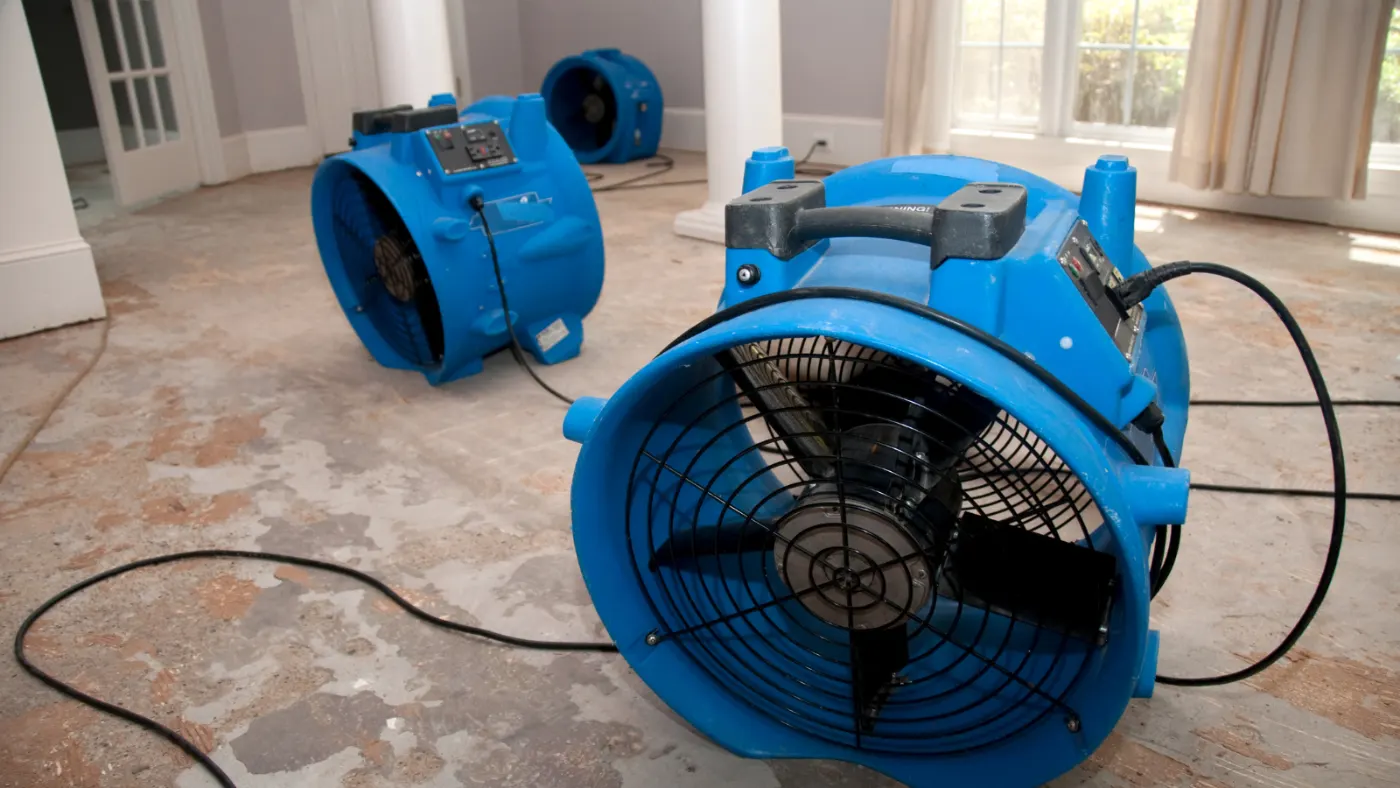
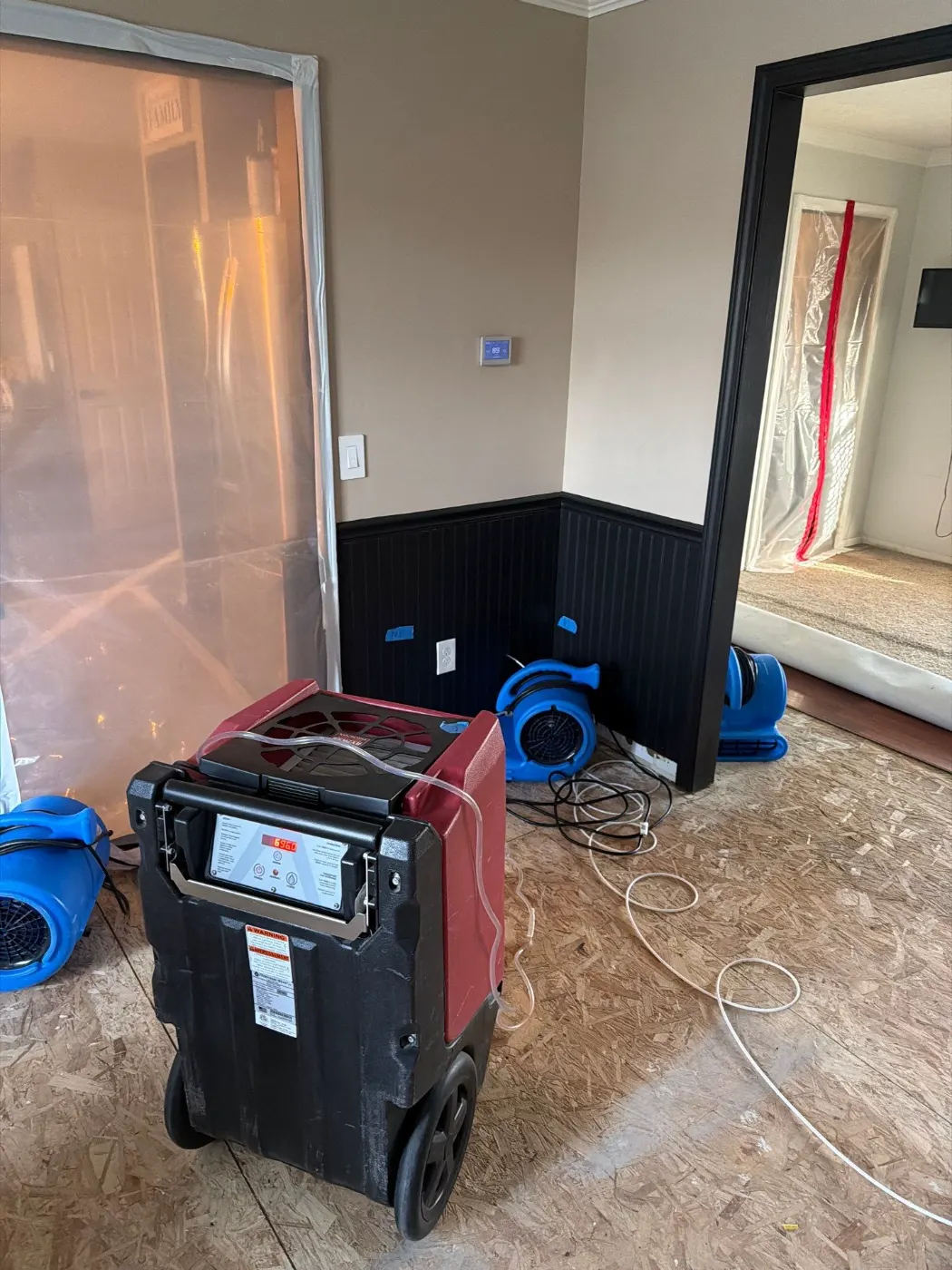
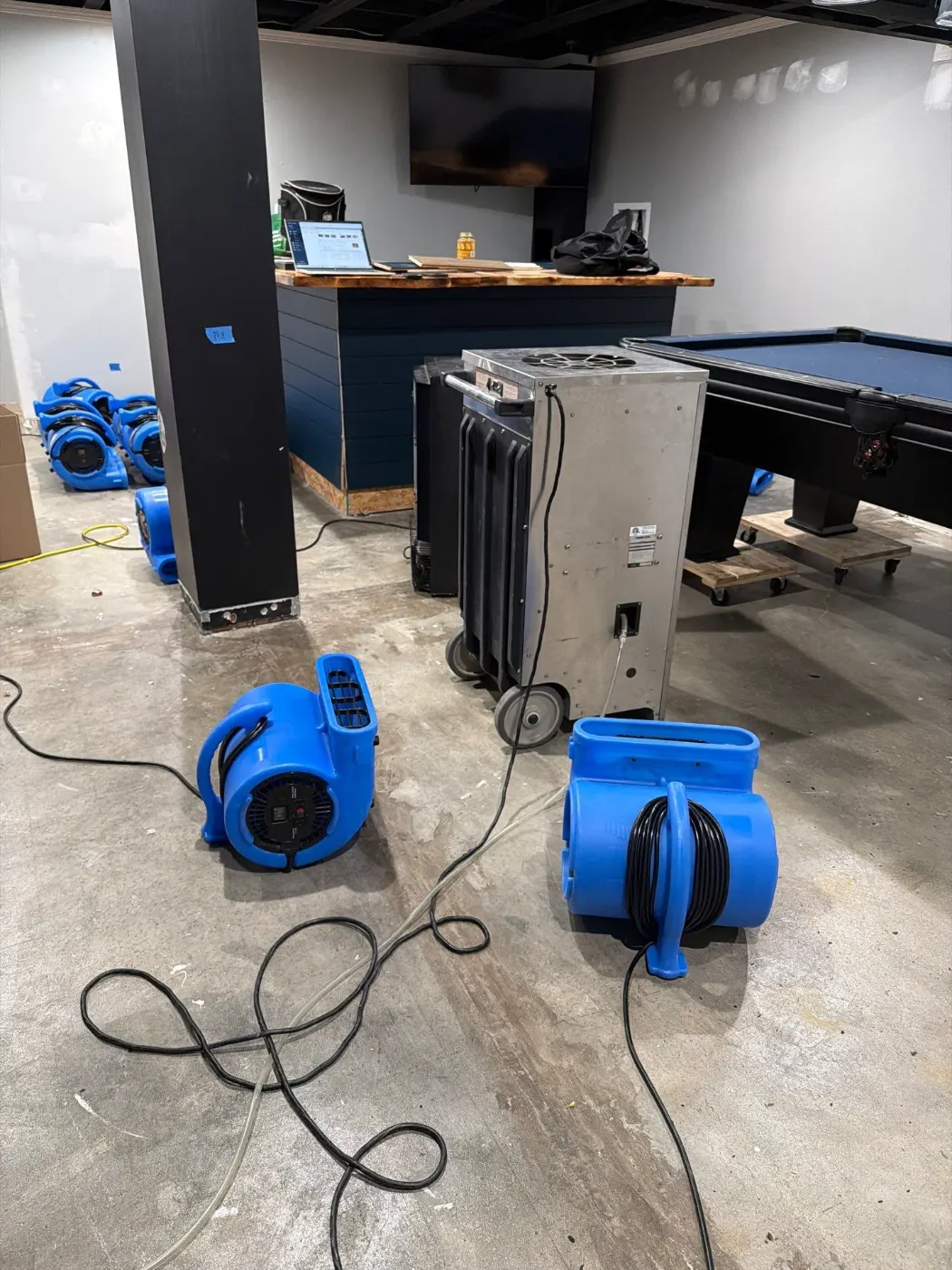
Dehumidifiers and air movers go inside the containment to dry remaining framing and substrate. A technician logs moisture content daily at marked locations. Equipment stays until the readings match unaffected areas of the same building, so nothing gets closed over damp material.
HVAC Restart and Filter Change
After containment is down, the building engineer changes the filters on the affected air handler and restarts it with the registers unsealed. Any duct work flagged earlier goes to your HVAC contractor first.
Final Walkthrough and Records
Building management and the team walk the finished space together, and the project file is handed over. That file holds the scope, the daily logs, the disposal records and any verification reports.
Commercial Mold Remediation in Clayton
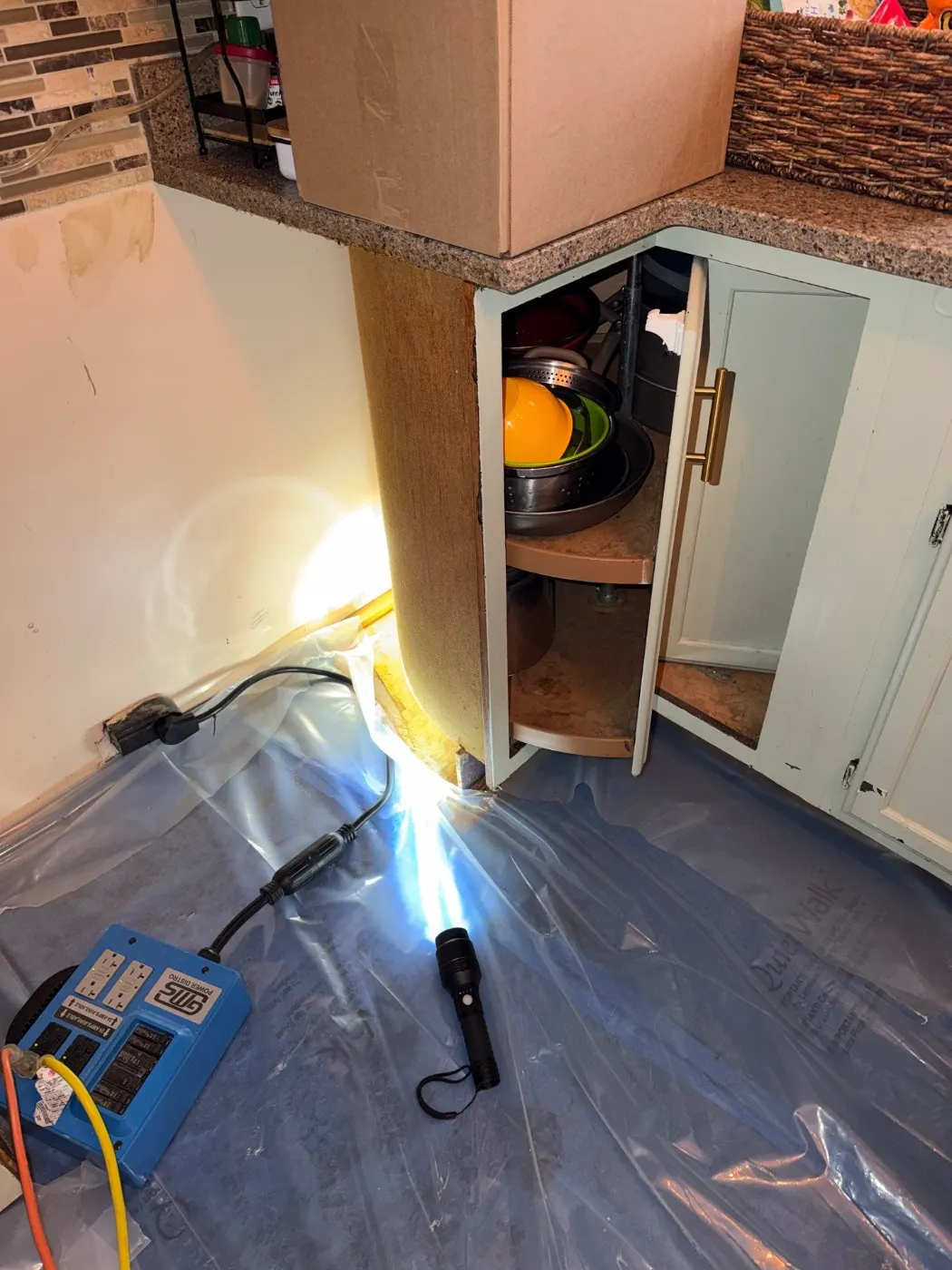
Photographs from real commercial mold remediation jobs completed by our crew in Clayton and surrounding areas.
Commercial Mold Remediation FAQ
Questions Clayton property managers ask us about commercial mold remediation.
Guidance and Standards for Commercial Mold Remediation
- The ANSI/IICRC S520 is the published standard for professional mold remediation. The current edition is the Fourth Edition, 2024. IICRC S520 Standard
- EPA’s mold guide says the key to mold control is moisture control. EPA: A Brief Guide to Mold, Moisture and Your Home
Clayton Neighborhoods We Serve
We take commercial mold remediation calls in every part of Clayton. Pick your neighborhood for local details.
Other Restoration Services in Clayton
Clayton Water Restoration handles the full scope of restoration work. Explore our other services below.
Water Damage Restoration in Clayton
24/7 emergency response. IICRC certified water restoration from extraction to full dry out.
Learn more →Basement Flooding in Clayton
Basement water emergencies handled fast. Extraction, drying, mold prevention.
Learn more →Sewage Cleanup in Clayton
Category 3 biohazard cleanup. Full containment, decontamination, structural restoration.
Learn more →Request Commercial Mold Remediation
Reach Us Directly
Our team is available 24/7 for emergencies and ready to schedule inspections during business hours.
Need Immediate Help?
For active water or mold emergencies, call us directly. We are available 24/7.